Leap day comes around once every four years to keep our calendars on track with the Earth’s revolutions around the sun (which take just a little over 365 days to complete – hence the need for day 366 every once in a while). People born on this day are aptly called leapers or leaplings, indicating their status of having entered the world on such a unique day – the odds of which are a mere 1 in 1,461. There’s even a club known as the Honor Society of Leap Year Babies for these elite winners in a game of chance. On this day we often celebrate the human leapers in our lives, but here at Defenders we also love our incredible wildlife leapers!
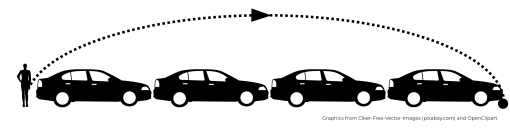
Imagine jumping straight up in the air to double your height when you’re startled, or your dog’s feet nearly clearing your eyebrows when he runs to greet you. That’s the same relative height the nine-inch-long Preble’s meadow jumping mouse—five and a half inches of which is all tail—leaps when it soars 18 inches into the air, powered by its large hind legs and feet. The Preble’s meadow jumping mouse not only rivals us in height, but also in distance - Edward Preble himself recorded the jumping mouse leaping up to 6-8 feet in distance for some its most impressive leaps (Preble 1899). This would be the equivalent of a six-foot-tall human jumping the length of four parked cars (roughly 56 feet) in one fluid motion – nearly doubling the current world record for the farthest long-jump (just under 30 feet according to the Guinness Book of World Records)!
The seemingly superhero strength of the Preble’s meadow jumping mouse is just scratching the surface of the great leapers listed as threatened and endangered under the Endangered Species Act (ESA) – a rare group that seems particularly appropriate to celebrate on Leap Day.
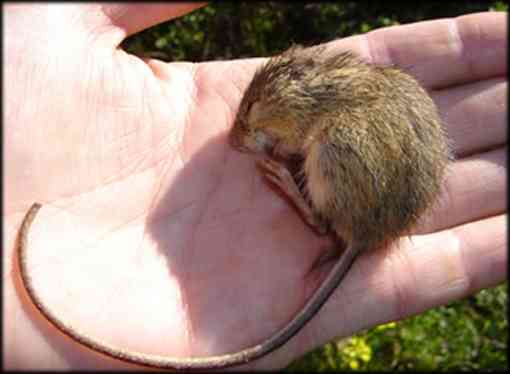
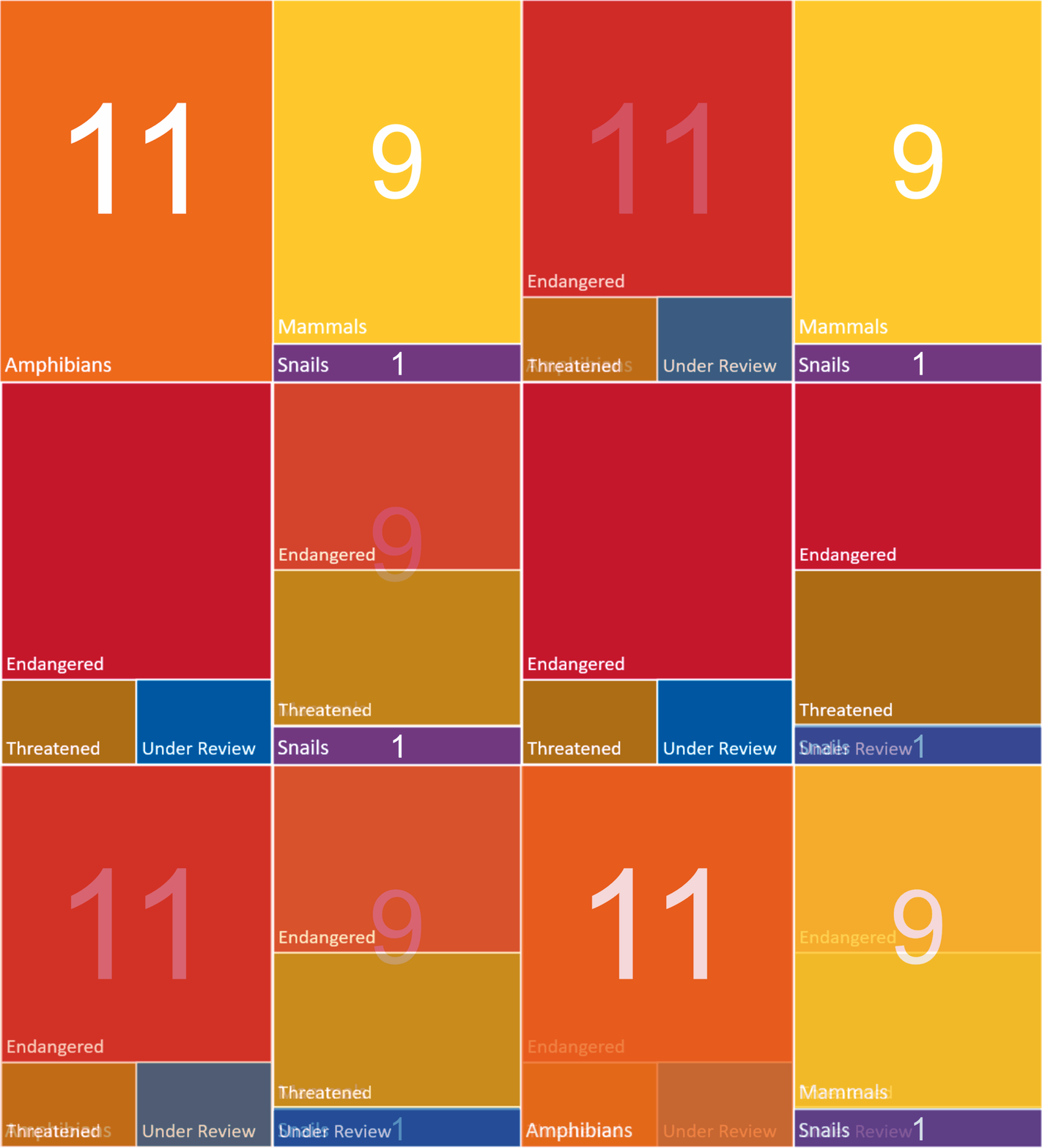
As a member of the Center for Conservation Innovation (CCI) here at Defenders of Wildlife, I work at the intersection of science, technology, and policy to improve conservation of all listed species, from the small but mighty Preble’s meadow jumping mouse in the grasslands to the incredibly tough Sierra Nevada yellow-legged frog high up in the mountains. I’m lucky enough to work on the GIS team within CCI, where we visualize where these species are located throughout the United States by mapping out their ranges. Leapers big—like the endangered giant kangaroo rat—and small—like the Burrington jumping-slug—grace us with their presence throughout the nation. Perhaps some of these great leapers—21 of which I’ve mapped below—are just a hop, skip, and a jump from your own backyard!



Bottom: A mountain yellow-legged frog, dusky gopher frog, and giant kangaroo rat
Leapers in More Ways Than One
We also have two members of the “leaper club” among the threatened and endangered species found outside the U.S. – the Hierro giant lizard and the Ibiza wall lizard. These two species are leapers for a different reason. Unlike kangaroo rats, jumping mice, frogs, toads, and even the jumping slug, these two reptiles don’t get much air. They’ve taken on the leaper status because the decision to list them as endangered and threatened, respectively, was made on February 29th, 1984 – that’s 36 years ago (or 9 in leap years 😉)!


Some of our other leaping threatened and endangered species that were not quite as lucky to be listed on a Leap Day, but were still listed within a Leap Year, include the Wyoming toad (listed in 1984), the Tipton kangaroo rat and Stephens’ kangaroo rat (both listed in 1988), and the California red-legged frog (listed in 1996).
As you celebrate Leap Day and any lovely leapers in your life, remember the non-human leapers all around you as well. Despite their ability to leap to new heights, they still can’t quite hop away from the human development, invasive species, pesticides, diseases, climate change, and habitat destruction and fragmentation that threaten their very survival. By supporting Defenders and our work here in CCI, you are helping us conserve and protect these great leapers all across the country, and that should give us all a reason to celebrate.
Author

Mae Lacey
comments
Wildlife & Wild Places


